
Driving Organizational Change Through an Incremental Design System Strategy
PROBLEM
Years of rapid organic growth at WeVideo, led to inconsistent experiences.
Core components were often rebuilt rather than reused contributing to technical debt and extending development timelines.
OUTCOME
15% decrease in Dev time
40% decrease in QA time
Role: Lead Product Designer
Team: X Product Designers, X Front-end Engineers, Product Managers
Timeline: X months
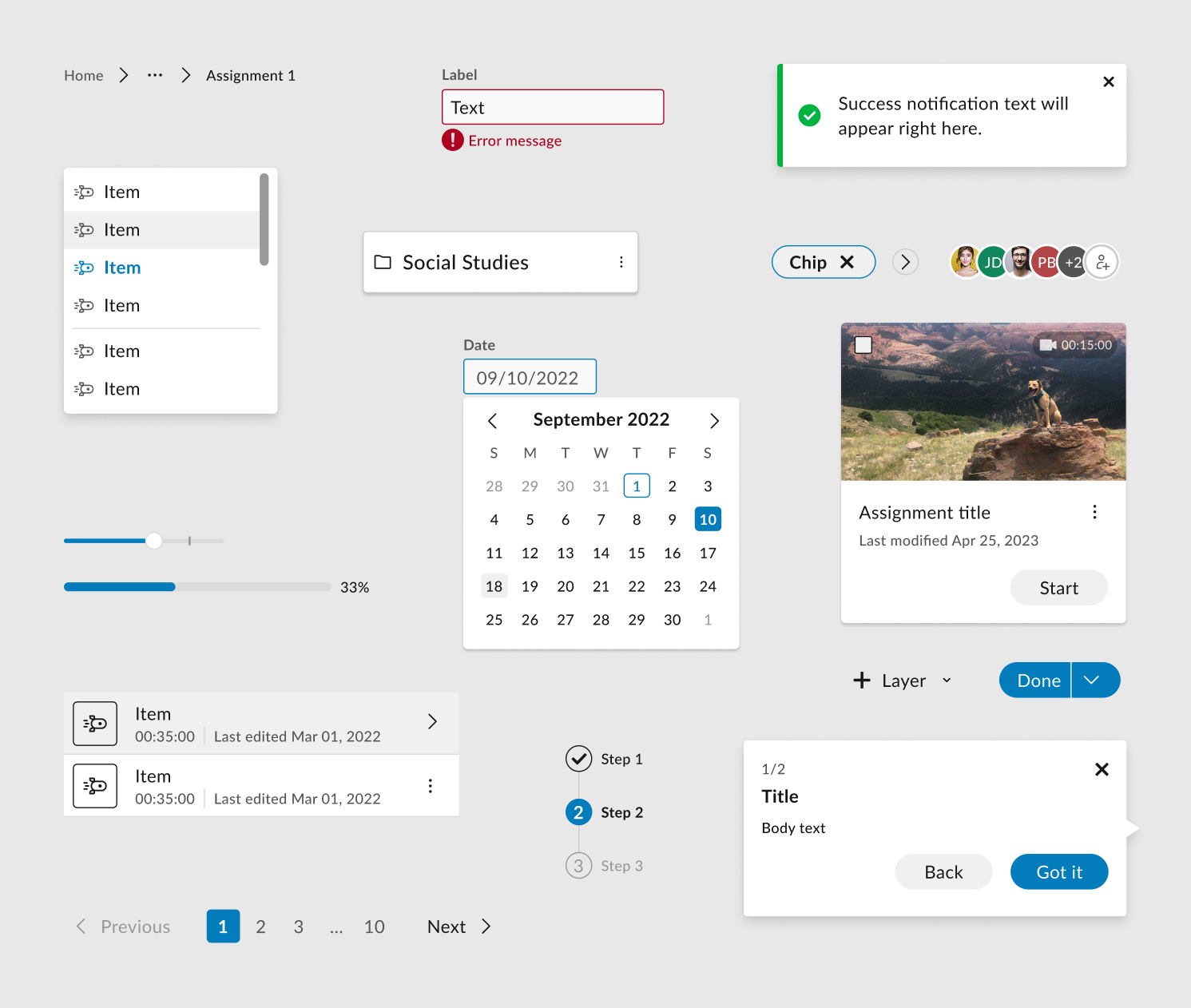
Context
As WeVideo expanded into the K-12 education market, the product needed to scale quickly without sacrificing quality. Years of organic growth had left the interface fragmented, slowing delivery, increasing maintenance costs, and creating inconsistent user experiences.
While a design system was clearly needed, there was no executive sponsorship, dedicated budget, or roadmap allocation. Rather than proposing a large infrastructure initiative, I embedded design system work into existing product investments..
Problem
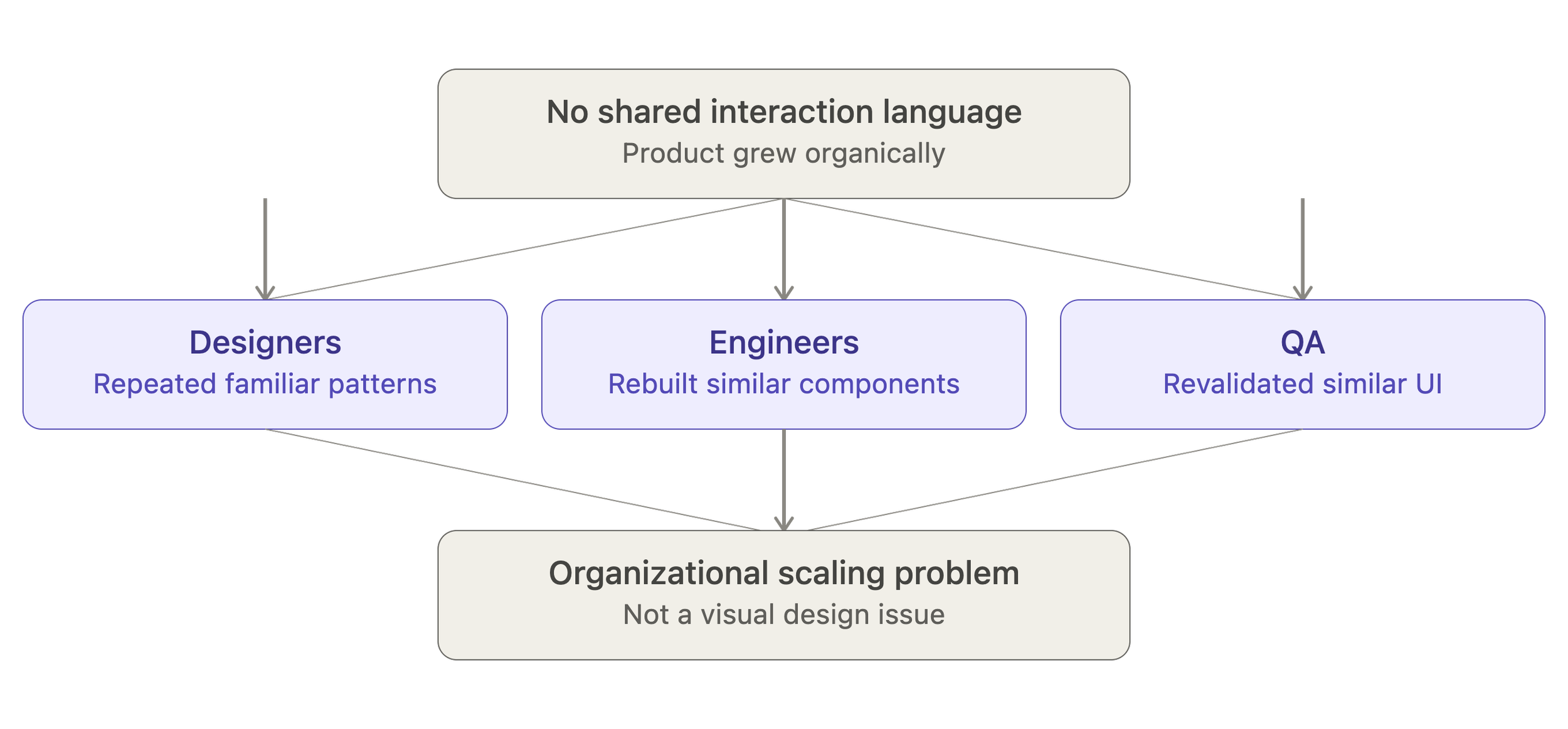
The challenge wasn't inconsistent UI. It was organizational complexity.
Independent teams were solving the same problems repeatedly, creating duplicate design and engineering effort while increasing implementation time, QA overhead, and long-term maintenance costs.
How might we reduce organizational complexity while accelerating product delivery?
Constraints
No executive sponsorship or dedicated funding
Engineering capacity committed to roadmap priorities
Multiple teams shipping independently
Fixed timeline for the K-12 launch
Instead of pursuing a top-down initiative, I chose an incremental strategy that demonstrated value through shipped product work.
My Role
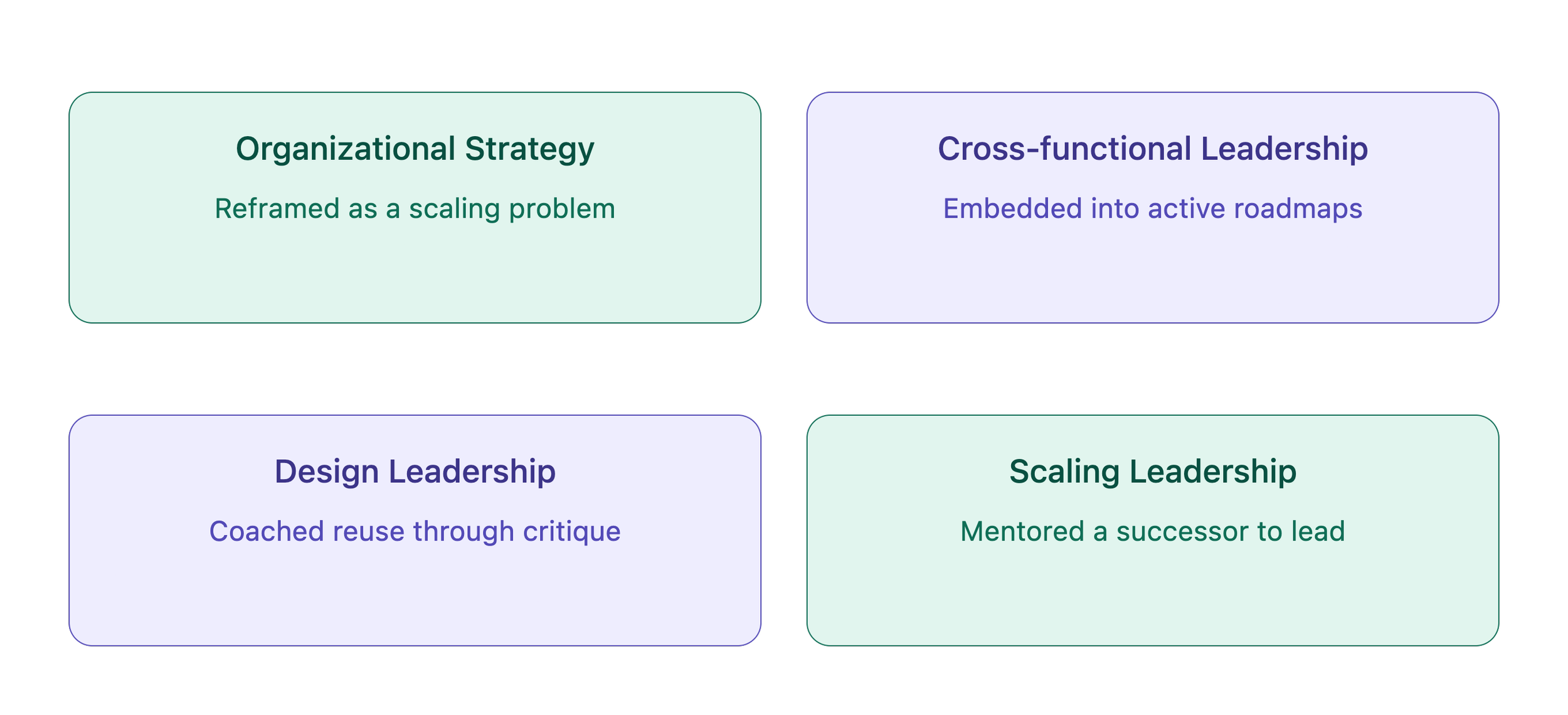
As Design Lead, I defined the adoption strategy and drove cross-functional alignment.
Developed an incremental rollout strategy aligned with active product work.
Partnered with Product and Engineering to prioritize reusable foundations that balanced user needs, technical feasibility, and delivery timelines.
Embedded reusable decision-making into design critiques and engineering reviews, replacing one-off solutions with shared patterns.
Mentored a designer to assume long-term ownership, establishing governance that allowed the system to scale beyond my involvement.
Strategy
Build momentum through delivery
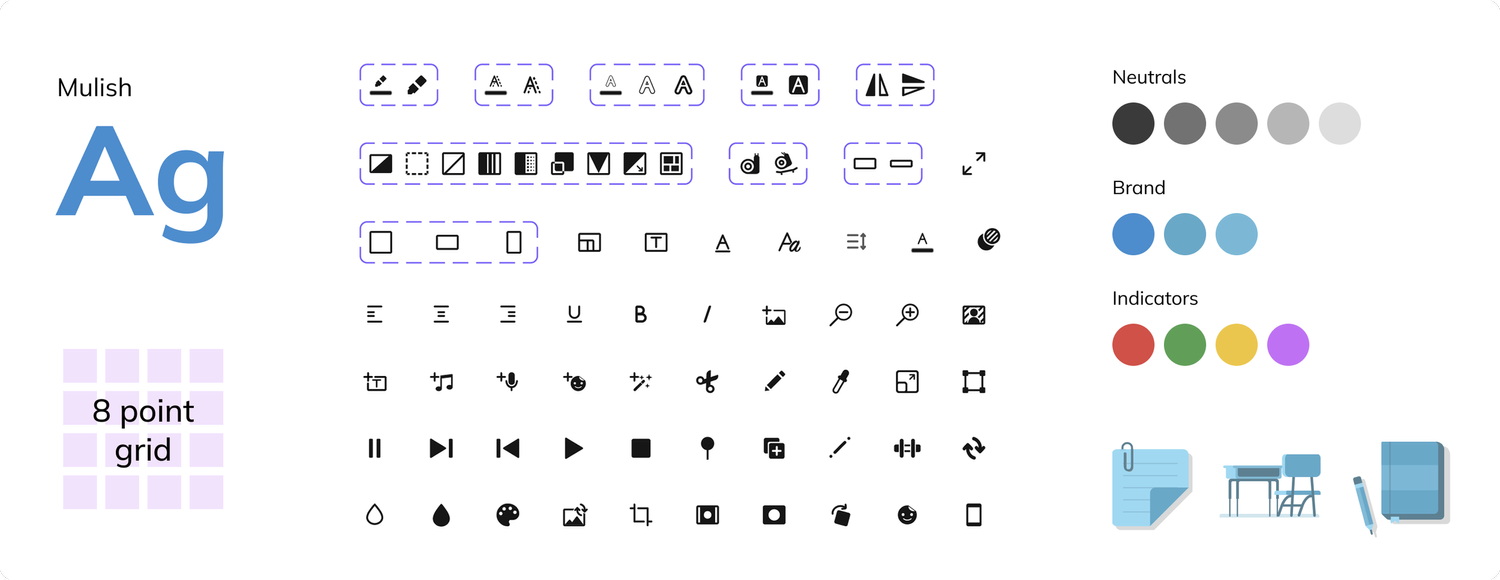
Rather than building a comprehensive design system upfront, we established foundational styles and reusable components while delivering product features. This allowed us to improve consistency without slowing roadmap execution.
Change behavior, not just components
Building components wasn't the hardest problem. Changing how teams made decisions was.
I embedded a reusable decision framework into existing design critiques and engineering reviews:
Can an existing pattern solve this problem?
If not, we discussed why before creating something new.
Over time, reuse became the default behavior instead of an enforced rule.
Scale through shared ownership
As adoption grew, I intentionally transitioned ownership by mentoring another designer and partnering them with engineering to establish governance, documentation, and design tokens.
The goal was never to own the system indefinitely. It was to build an organization that no longer depended on one owner.
Tradeoffs
A comprehensive design system would have delayed delivery and required organizational support we didn't have.
Instead, we prioritized foundational components that delivered immediate value while creating a scalable framework for future growth.
Outcome
Reduced development time by 15%
Reduced QA effort by 40%
Established reusable foundations for the next-generation K-12 platform
Increased design maturity through shared patterns and governance
Grew a new design leader to sustain the initiative
The biggest impact wasn't consistency. It was creating leverage. Teams spent less time rebuilding UI and more time delivering customer value, while the organization gained a scalable foundation for future product development.
Reflection
This project reinforced that lasting organizational change rarely requires formal authority.
Without executive sponsorship, success depended on influence. Embedding reusable thinking into existing workflows proved more effective than introducing new process or governance.
The lasting outcome wasn't a component library. It was a shared way of working that continued to scale after I stepped away.
Changing the culture
Establishing the system was one thing, sticking to it? That became our first challenge. We all needed to pivot our culture and remain true to our principle: Reusability.
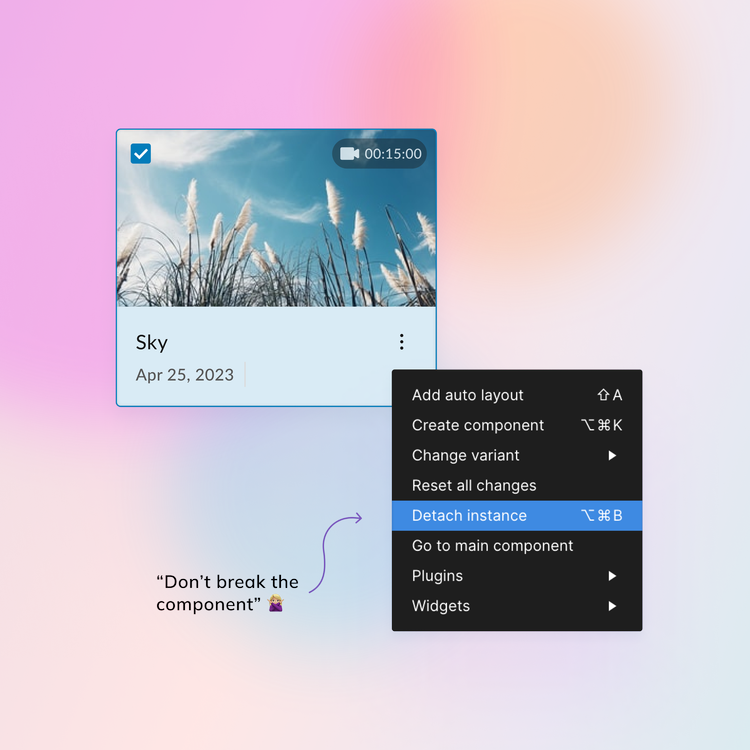
We pledged to keep each other accountable. During design critiques or code-reviews we had representatives reminding us to use what we had before creating a variant.
Our collective goal was to design a platform that looked cohesive and was faster to build, so we needed everyone’s focus for it to happen.
Taking shape
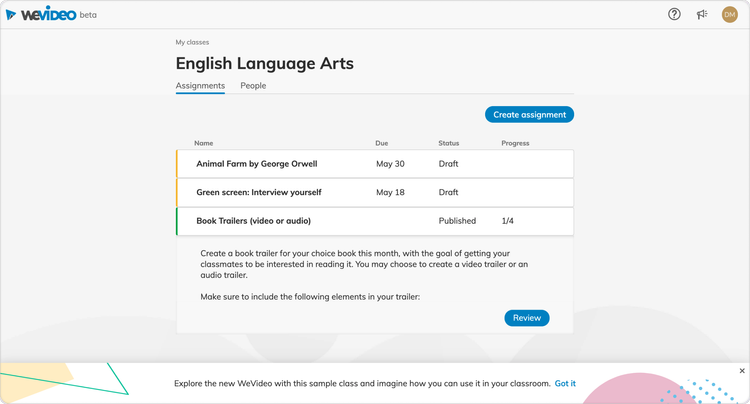
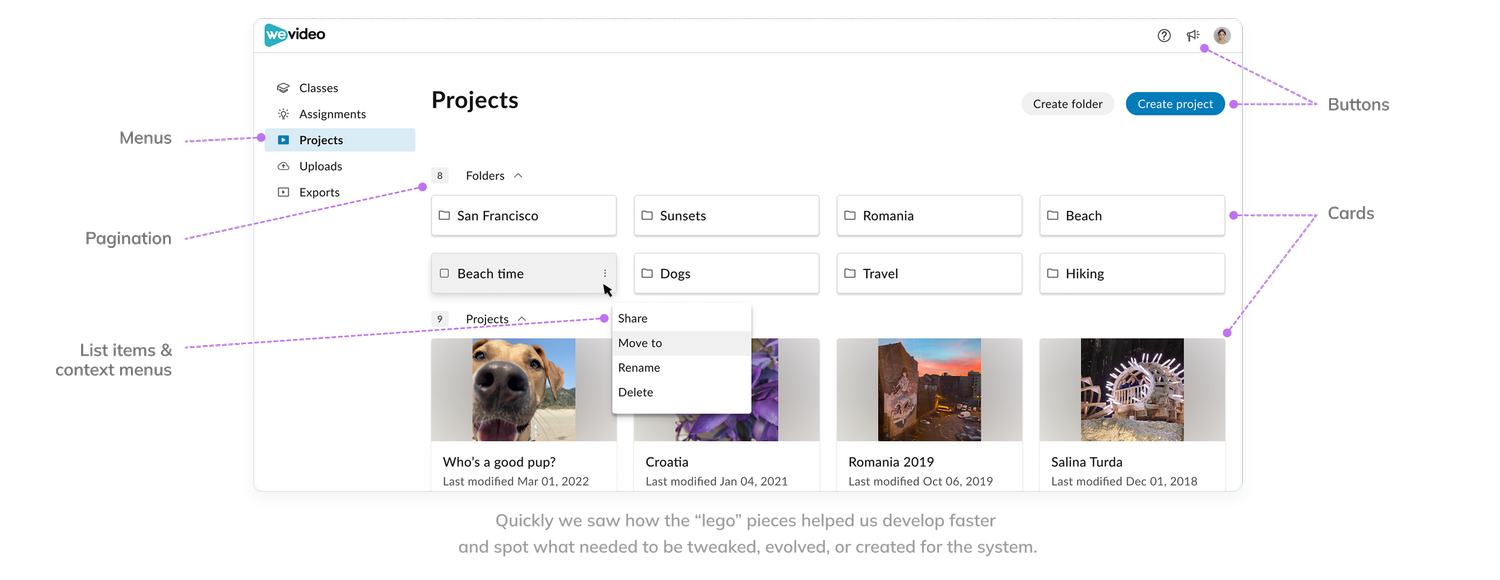
As we created prototypes of the next-gen experience we used the style guide we defined on phase 1. This helped us find the gaps and test the reusability of our system.
We made intentional tweaks along the way discussing them as a team before introducing new variants to ensure we were remaining within the system.
Image shows an example of the new pages using the system.
Phase 2
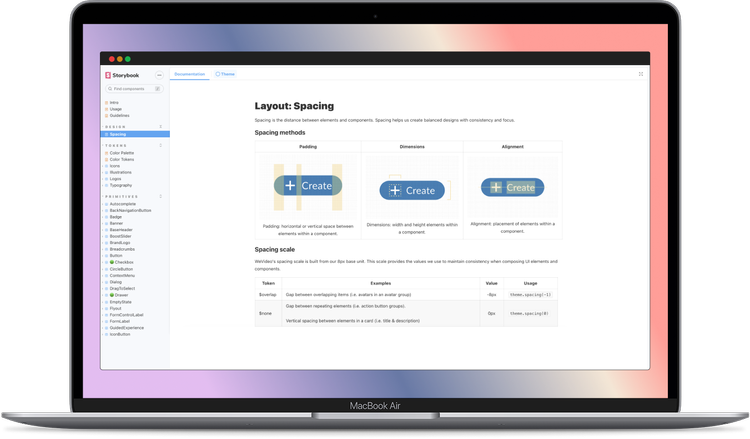
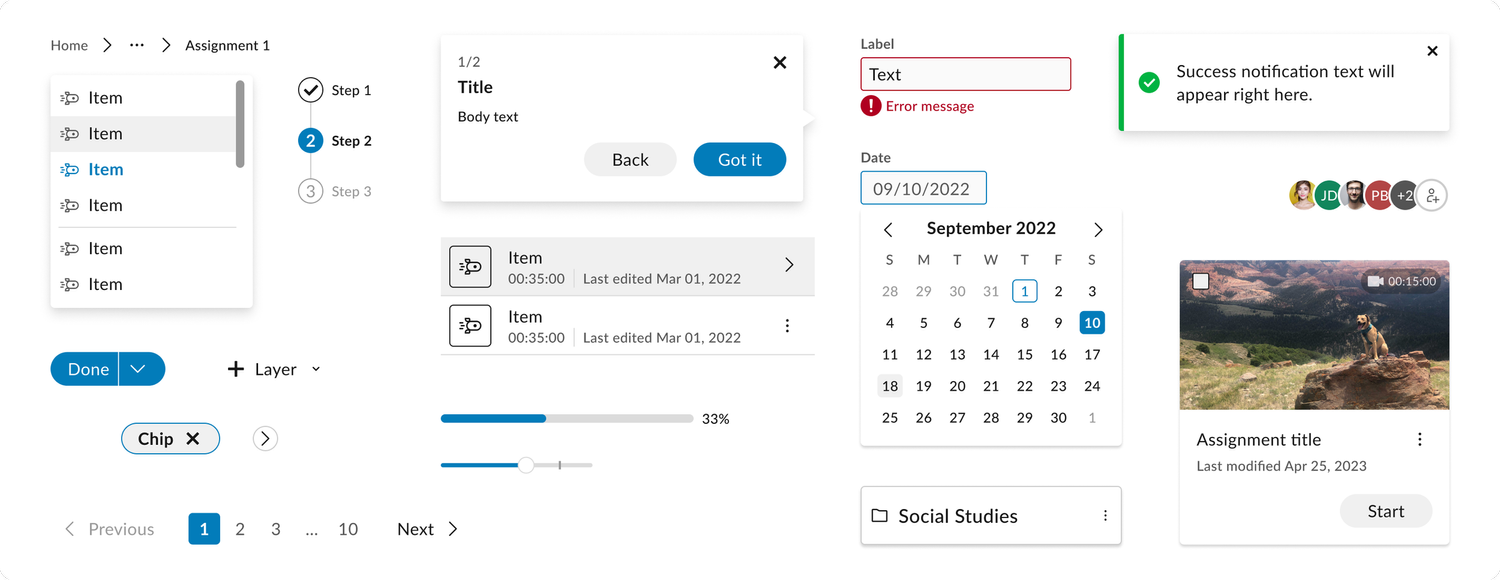
Having proven the system’s impact, I assigned a designer to lead its next phase with two developers. They established processes and tools to ensure consistent growth and maintenance including regular reviews, documentation, and tokens.

Learnings and results
Establishing a system is an initiative. Learning how to advocate and plan for this long-term investment is critical for its success.
The system brought consistency to the product and an exponential increase in efficiency to our team. Leaving this legacy is one of my proudest achievements at WeVideo.