
WeVideo for Classrooms
Empowering teachers to seamlessly integrate video storytelling into lessons, foster creativity, and confidence. Increased NPS score by +33 points.
MY ROLE
Key leader shaping project direction & company future
Developed the company’s 1st next-generation product app
Strategic planning, decision-making, task-management
Established the company’s 1st design system centering WCAG accessibility standards
Initial Discovery
Audited the existing product,
analyzed internal user feedback data, and
led project kick-off discussions with the PM, Head of Engineering, and Design Leadership to align on vision and scope.
Product Strategy
Created and presented the vision deck to Leadership,
**socialized the initiative across departments, and identified strategic opportunities.
Defined the design roadmap, aligning deliverables with business goals and stakeholder expectations.
User Research
Led user and stakeholder interviews,
collaborated with Sales for customer insights,
conducted competitive analysis and heuristic evaluations to drive informed design decisions.
Product Design
Owned the end-to-end UX journey, from discovery to delivery.
Strategically divided and delegated tasks to a junior designer to maximize efficiency and mentorship impact.
Design Systems
**Led the creation of the company’s first design system, establishing scalable foundations for icons, typography, spacing, and component patterns, fostering consistency and speed across teams.
Accessibility
Ensured all components met WCAG accessibility standards.
Introduced a new dev handoff process to guide engineering on key elements like contrast, tab order, and focus states.
CONTEXT
Aging Infrastructure, Growing User Needs
WeVideo enabled users across education, small to enterprise businesses, and professionals to create high-quality videos in the cloud. But as the product aged over 10 years, users increasingly struggled with outdated interfaces, missing features, and a disjointed experience. Competing platforms had surpassed us in polish, performance, and accessibility which led to growing user frustration and lost sales.
THE APPROACH
Strategic Realignment Toward High-Impact Verticals
To support long-term growth and improve user satisfaction, we focused our impact on our most profitable audience: K–12 educators and students. This required a complete redesign of the classroom video experience with an emphasis on ease of use, simplicity, and accessibility.
Business Goals
Engage & Inspire: Build an intuitive video editing ecosystem for teachers.
Build for the Future: Lay the foundation for long-term scalability with a modern design system and UI architecture.
Design for All: Ensure full WCAG AA compliance to improve usability for all.
PLANNING
Scope based on Priority
As the lead designer for the complex and ambiguous project with a limited time, I created a game plan for the designs and schedule based on the necessities for the MVP for our intended launch date.
Defined requirements and prioritized the most impactful workstreams based on our primary users (teachers) and their most common use cases and needs.
Audited of the current state: what’s not working, what is working, what we know, and need to know.
Broke down large design tasks and delegated.
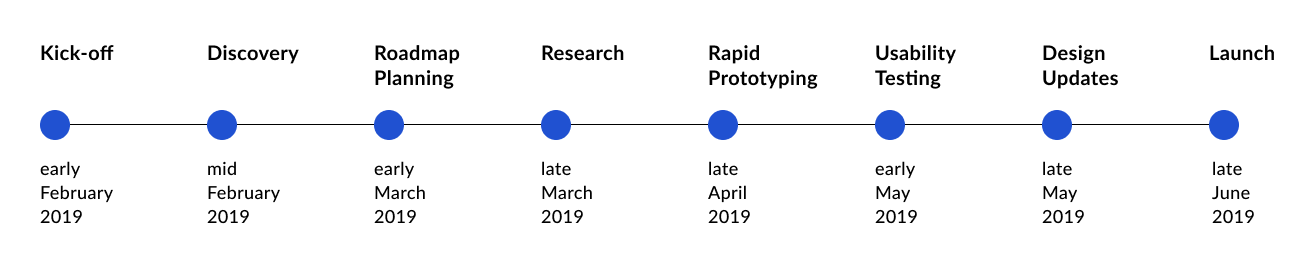
Kickoff/ Discovery
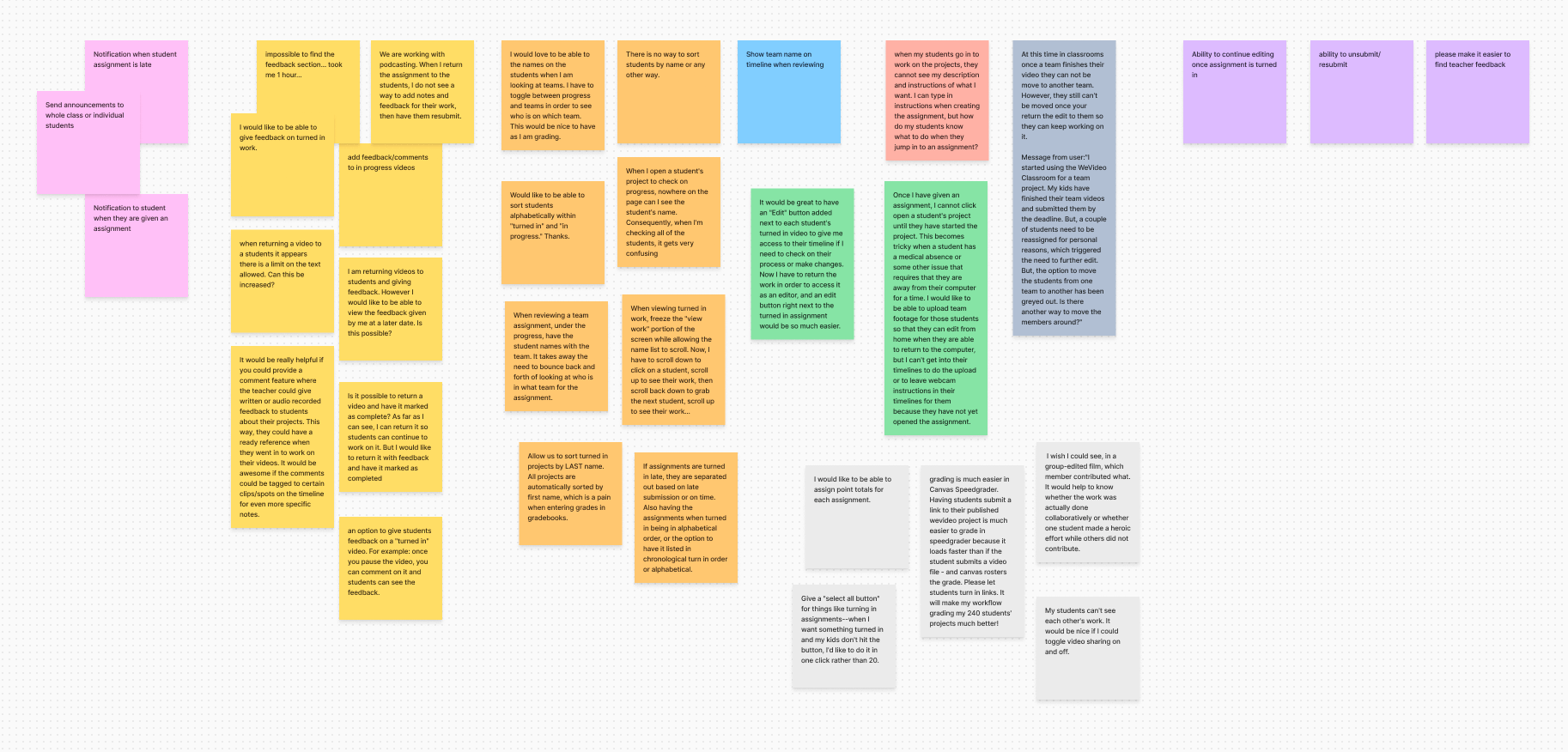
Customer Insights
I synthesized existing user data, interviewed education ambassadors and sales reps to uncover teacher pain points and use cases, and conducted a competitive analysis of EdTech platforms. Findings were consolidated into a prioritized spreadsheet with feature recommendations, UX values, and impact ratings.
Key Insights
Teachers often had to use time-consuming workarounds with the flagship product
Unnecessary features confused students, especially in the younger grades.
Accessibility issues made the product hard to sell to districts and excluded users.
Multi-Persona User Flows
During a team meeting, a disagreement among different stakeholders helped me identify a critical misalignment in who our users were. To create shared alignment, I proactively:
Led a Proto-persona workshop with nine cross-functional stakeholders, delivering actionable primary and secondary personas with just 90 minutes of collaboration and two hours of synthesis.
Transformed these insights into strategic, user-centered journey flows, ensuring design decisions were rooted in empathy and aligned with business goals
Limitations - I knew that the personas would need more time and research to validate, but we were no longer blocked by misalignment. I had also identified 2 other personas but again with time constraints, I made a plan to return to the Persona research post-launch.
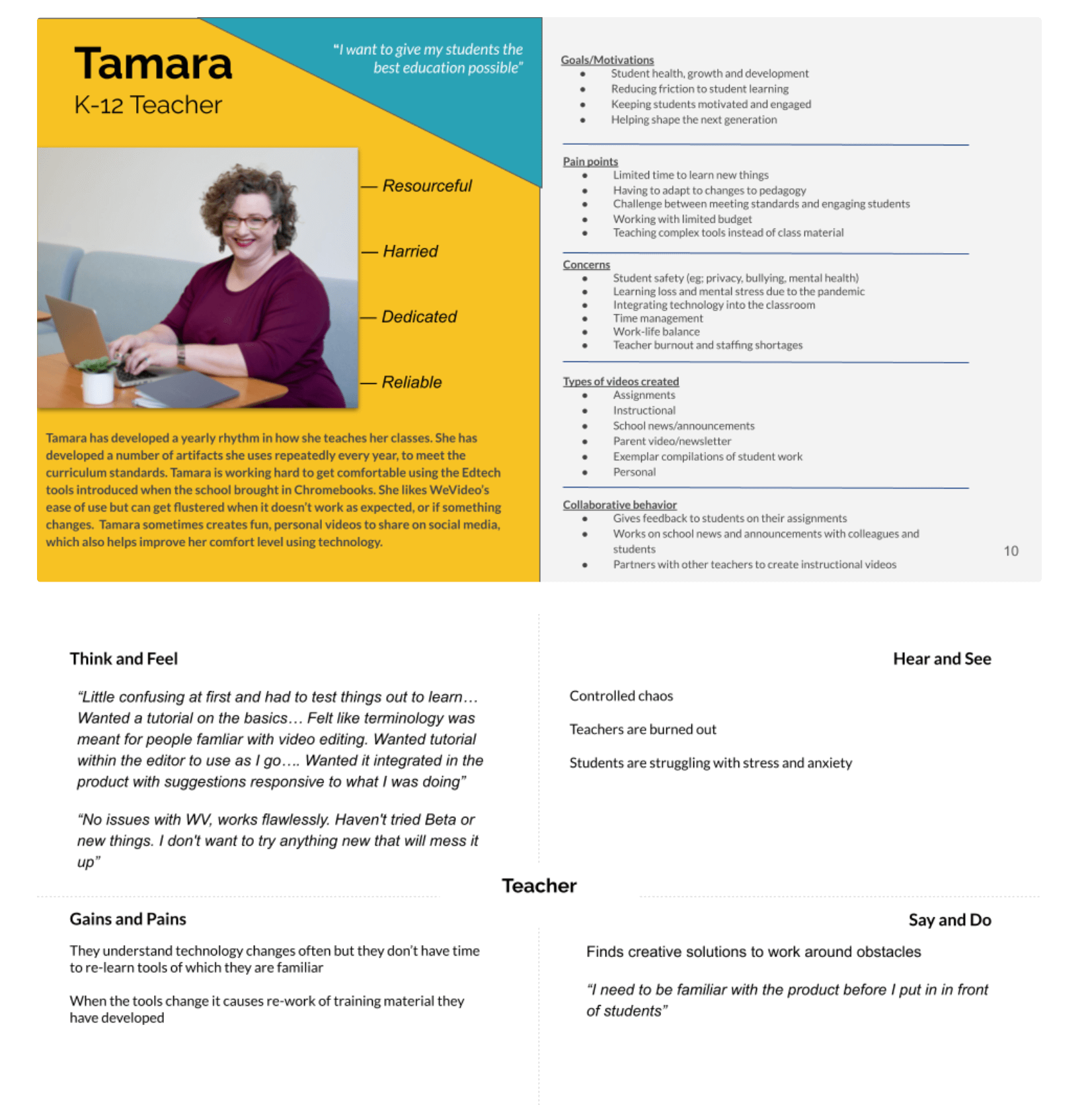
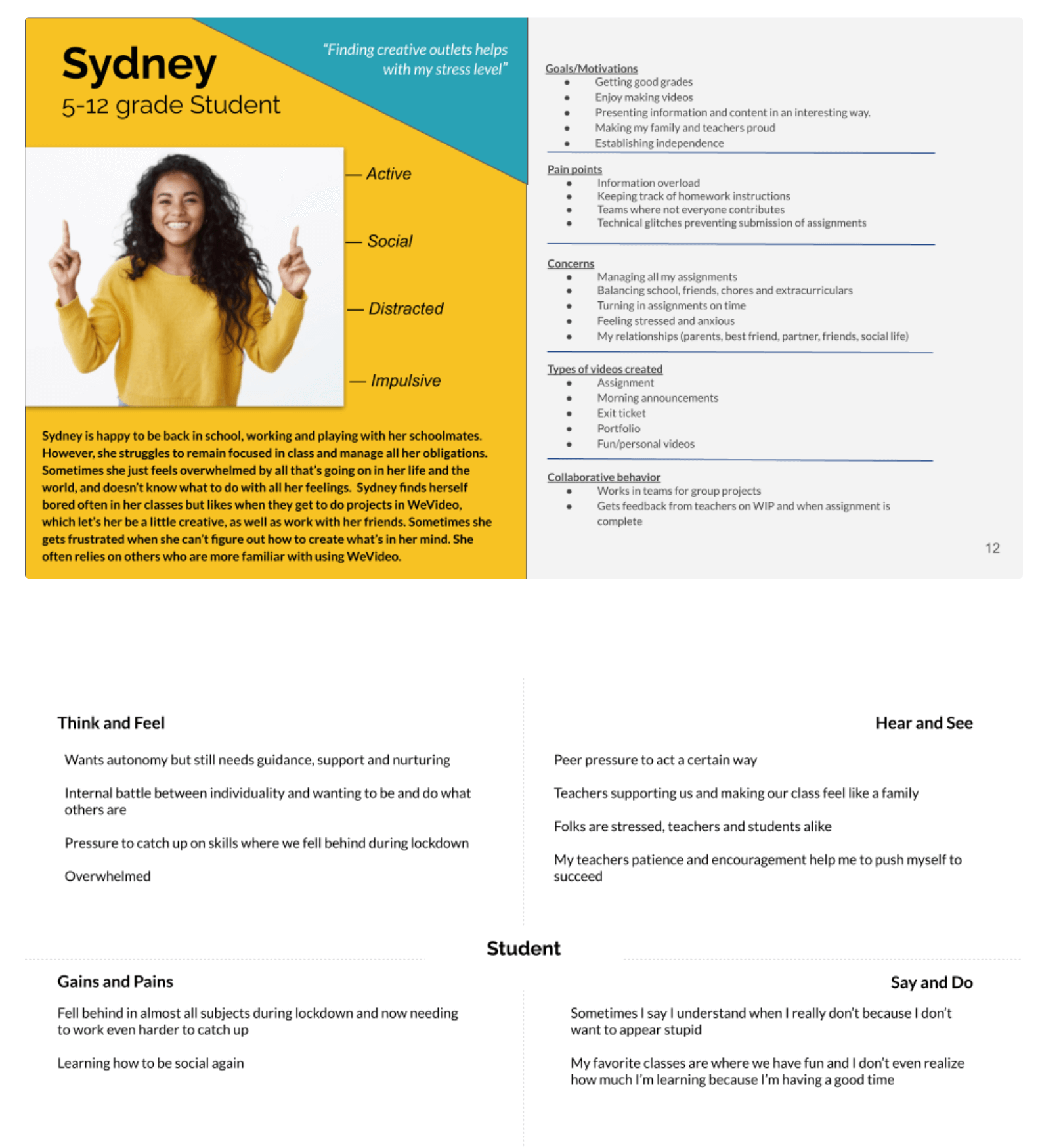
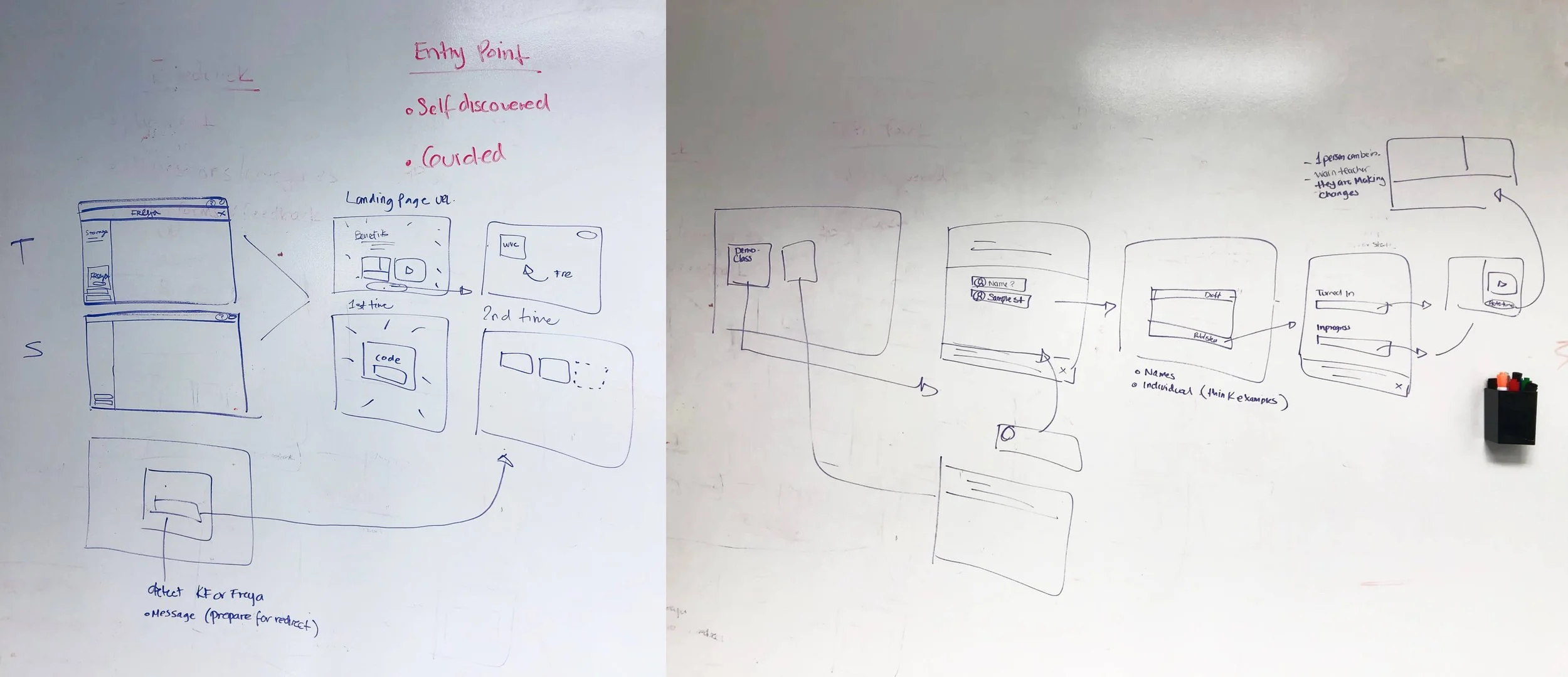
Brainstorm sessions
I rapidly mapped out user flows to visualize the end-to-end experience, then drove collaborative brainstorming and fast-paced iterations to ensure the concept was cohesive, scalable, and aligned across the system.
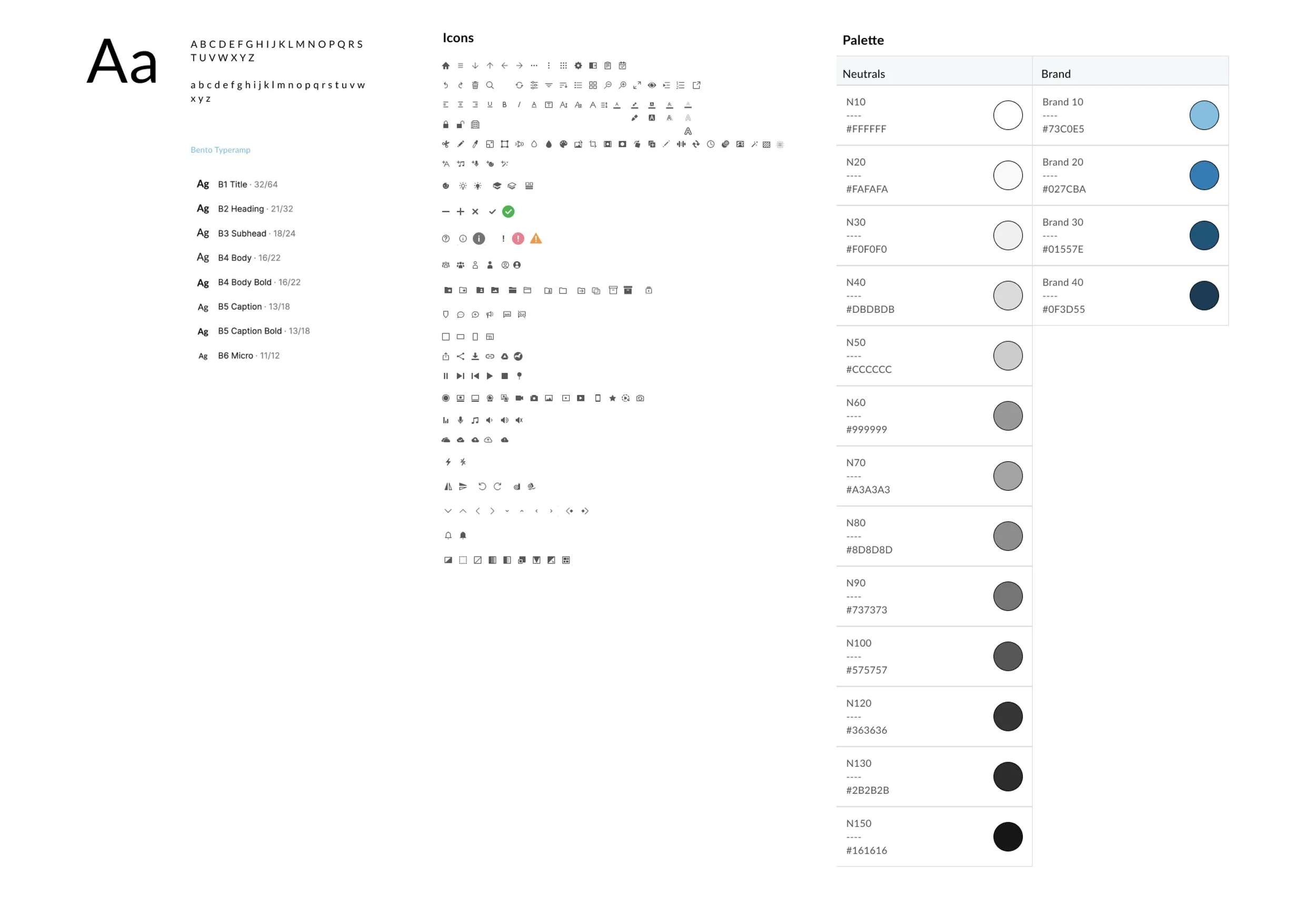
Design Systems for Speed, Consistency, and Accessibility
To streamline workflows and scale design efficiently:
I created WeVideo’s first scalable design system.
The system reflected WeVideo’s brand values while driving consistency across platforms.
Every component was built with accessibility in mind, meeting WCAG standards to support inclusive design and faster development handoff.
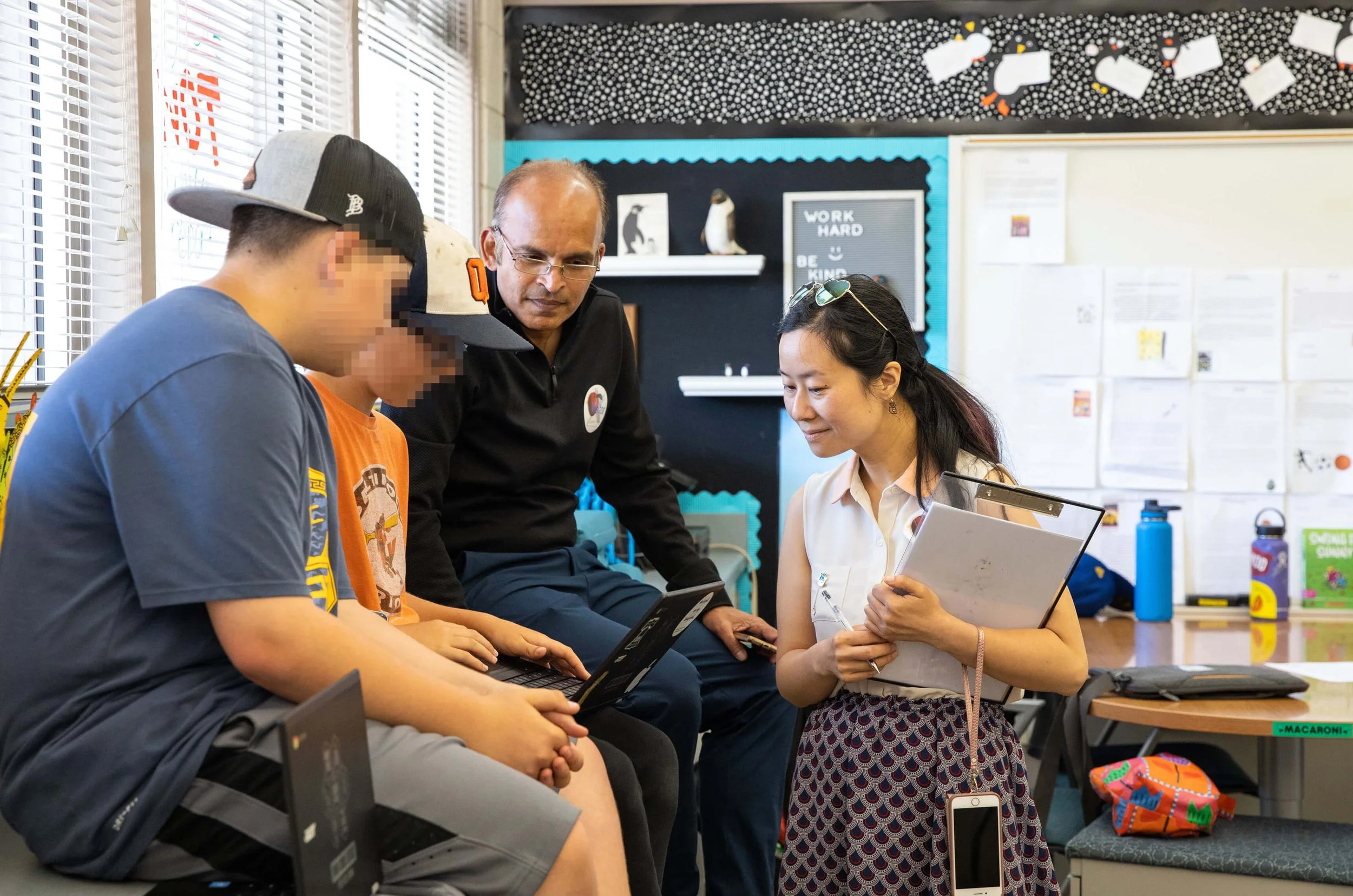
Usability Testing
I identified key friction points early, rapidly prototyped a solution, and tested with our Education Ambassadors.
Main takeaways
Users skipped key steps we thought were intuitive, highlighting where clearer guidance or design cues were needed.
While users said the feature was useful, testing showed they struggled to find or use it. This highlighted the need for better discoverability.
A minor copy change and a repositioned button reduced task completion time by 40%, showing how small UX shifts can have a major impact.
After design updates with clearer next-step navigation, there was a 30% increase in task success rate
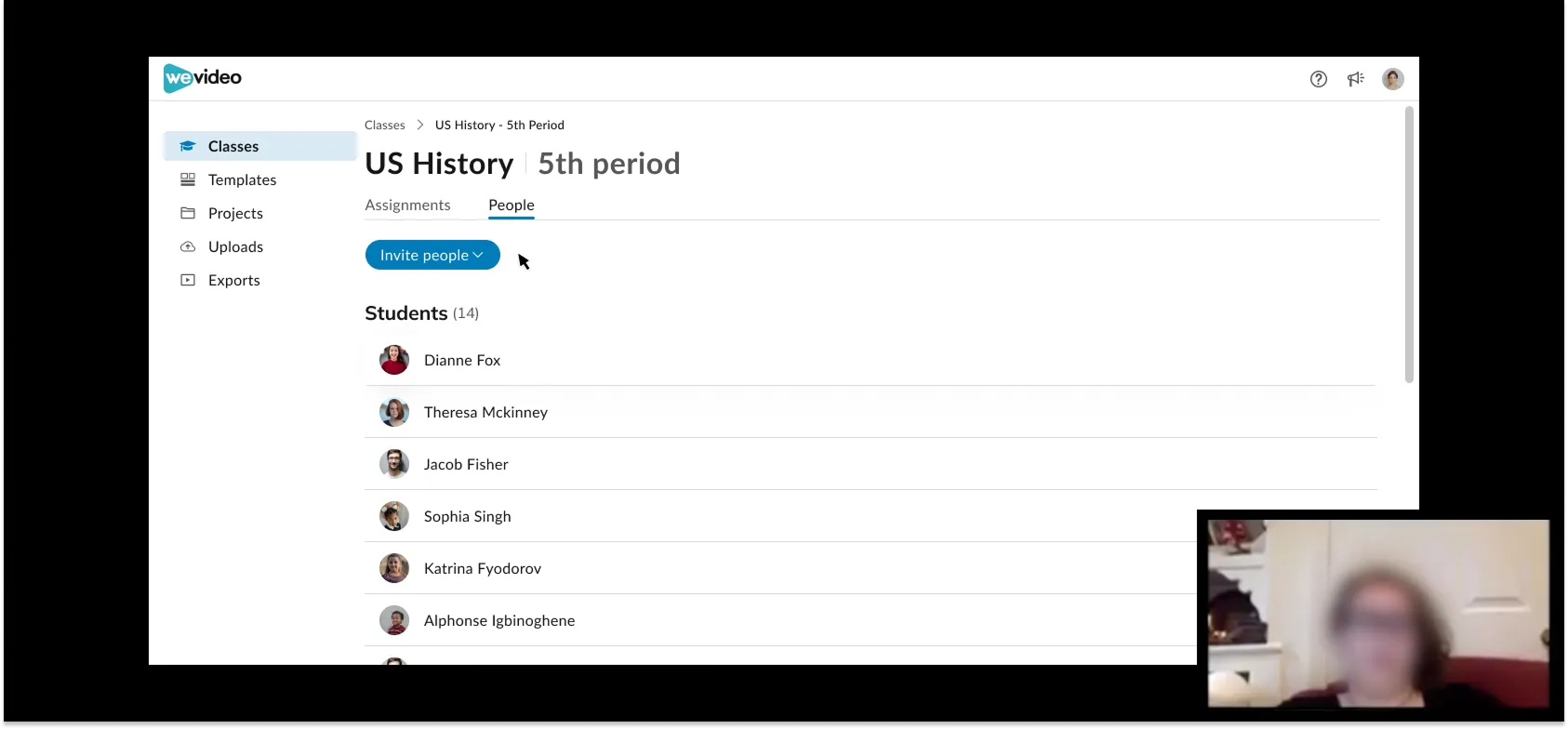
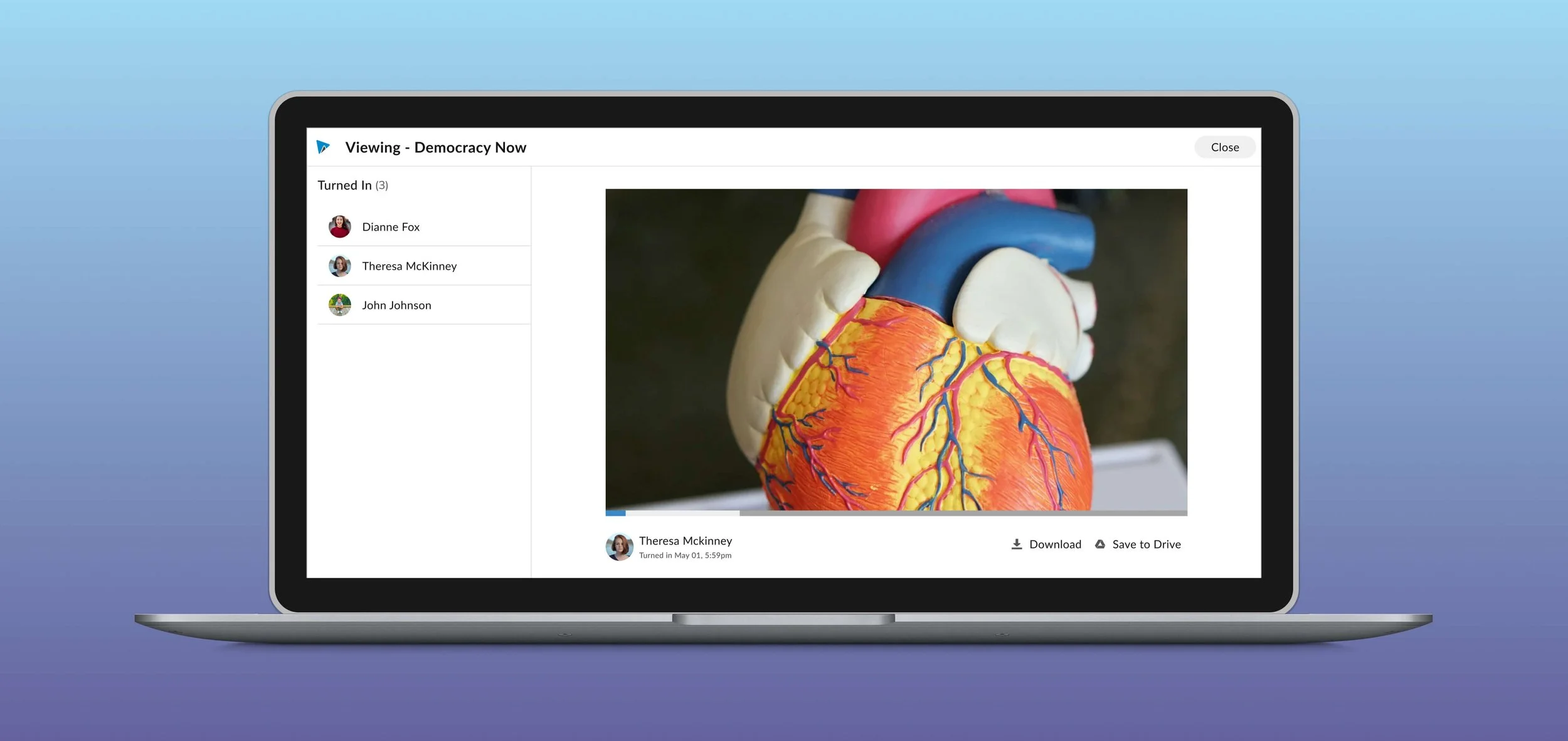
Final Design
Impact
Increased NPS score by +33
After just six months, WeVideo Classroom was launched and received enthusiastic feedback and strong engagement from the Education Ambassador community. The initiative was recognized by C-suite leadership as an “exemplary project” that set a new benchmark for future company-wide efforts.
A completely new codebase, enabling support for the latest technologies, performance enhancements, and future feature scalability.
I drove the creation of a fully accessible, brand-new design system, collaborating closely with Accessible360. Their audit confirmed the product met industry standards for inclusive design, establishing a new accessibility baseline at WeVideo.
Learnings & Problem-Solving
Faced with ambiguity and tight deadlines, we operated in a lean, fast-paced environment, prioritizing high-impact solutions to keep momentum without losing sight of long-term quality.
When time zone and communication challenges arose with our engineering team in Romania, I introduced video demo walkthroughs for developer handoffs and feasibility questions. This approach dramatically decreased friction and increased team alignment.
With a fixed timeline, we had to critically evaluate the scope of our selected user journeys. We made strategic compromises, choosing to launch a beta with select users to validate assumptions and minimize risk before the full launch.